
Bike Fit Perth: Saddle Science for Peak Cycling Performance
A Perth bike fit is more than adjusting bolts or copying generic measurements. It is the practical science of matching bicycle to body so each pedal stroke feels natural, efficient, and sustainable. This article explains how a structured bike fit at Livefit Australia, led by experienced fitter Andrew Budge, helps riders across Western Australia improve comfort, reduce injury risk, and ride more consistently. You will learn why saddle choice, cleat position, and cockpit setup matter, how a methodical fitting process works, and why investing in a professional fit pays off whether you ride for fitness, competition, or daily transport.
Article outline
Why a bike fit matters for cyclists in Perth
How a professional bike fit improves power and comfort
What sets Livefit Australia apart as a Perth bike fit studio
Who Andrew Budge is and how experience improves outcomes
Why custom bike fitting outperforms DIY adjustments
What happens during a 90 minute bike fit in Bassendean
How biomechanical assessment refines riding position
How fit requirements differ across road, triathlon, and MTB
Why cleats, saddle, and cockpit determine long-term comfort
How to book a Perth bike fit and ride better
1. Why does a bike fit matter for every cyclist in Perth?
Perth’s flat roads, river paths, coastal winds, and expanding gravel network encourage long hours in the saddle. Many riders purchase quality bikes but ride them with factory settings that do not reflect their anatomy, flexibility, or riding history. Over time, poor alignment increases stress on knees, hips, and the lower back, often limiting training consistency more than fitness ever will.
A proper bike fit aligns joints and load paths so effort is distributed efficiently. Riders typically report improved breathing, smoother cadence, and fewer niggling aches. For commuters this means arriving more comfortable and upright. For recreational and competitive riders it often means longer rides with less fatigue and more repeatable performance.
2. How can a professional bike fit maximise power and comfort?
Power and comfort are not opposing goals. They are closely linked. When position is balanced, muscles work within their preferred ranges and stabilising tension is reduced. Small adjustments in saddle height, setback, or bar reach can significantly change how force is applied through the pedal stroke.
A professional fit looks beyond static measurements. It considers how the rider moves under load and how position affects stability and breathing. Riders often notice smoother power delivery and less upper body tension, which in turn improves endurance. Comfort improves because pressure is shared correctly between feet, saddle, and hands rather than being forced into one contact point.
3. What makes Livefit Australia’s Perth bike fit studio different?
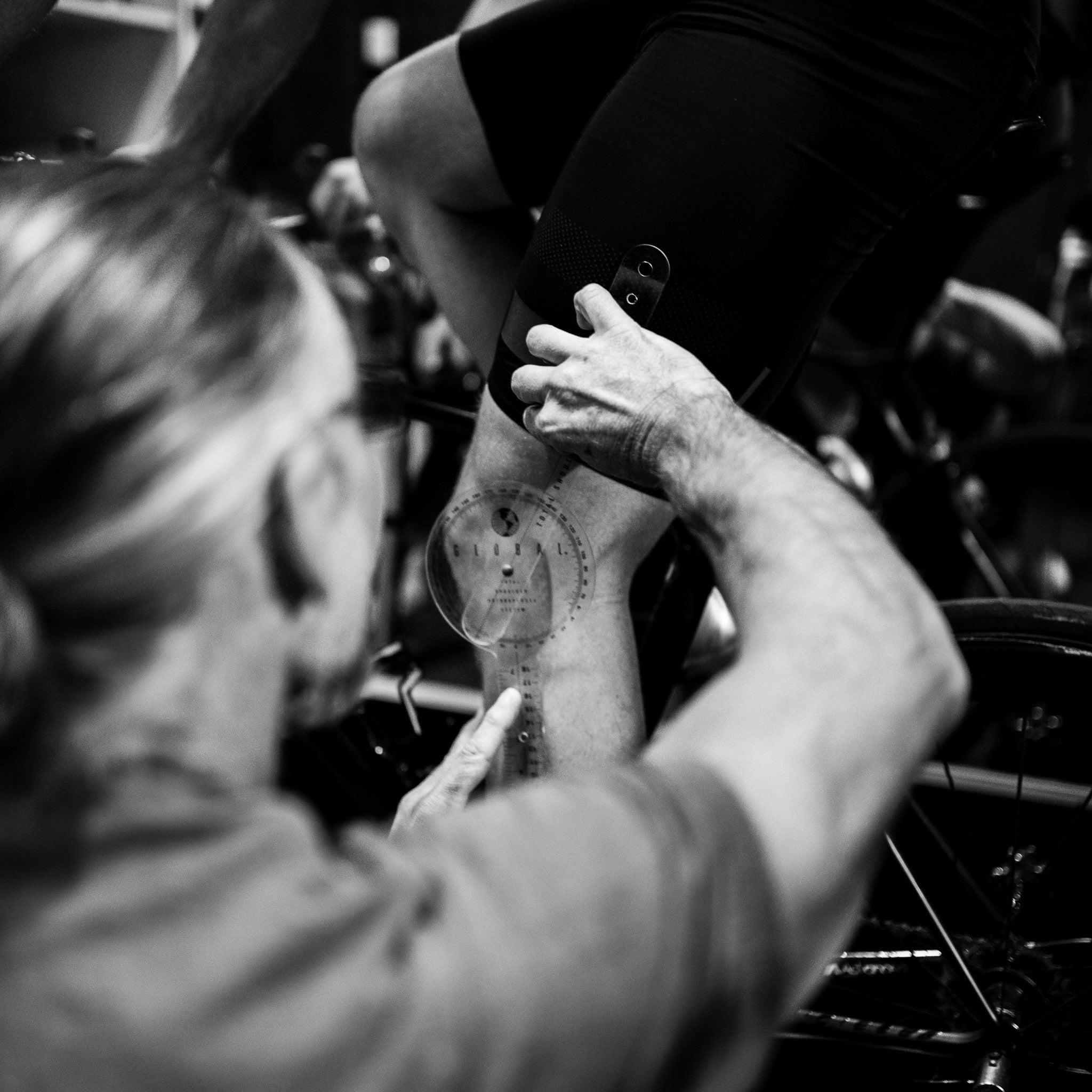
Livefit Australia operates from its Bassendean studio with a deliberately practical approach to bike fitting. Rather than relying on motion capture systems or camera-based analysis, fittings are built around proven measurement tools, careful observation, and rider feedback. Knee angles are checked with a goniometer, saddle position is assessed with reference tools, and posture is evaluated dynamically while riding.
This approach prioritises how the rider feels and functions on the bike rather than chasing idealised numbers. The environment is relaxed and welcoming, making it suitable for new riders as well as experienced cyclists who want thoughtful refinement rather than overcomplication.
4. Who is Andrew Budge and how do 30 years of experience benefit you?
Andrew Budge has spent over three decades working with cyclists as a coach, fitter, and practitioner. His experience spans junior development, competitive road cycling, time trialling, and endurance sport. Over the years he has refined thousands of setups and developed a strong understanding of how individual bodies interact with bikes.
Andrew is known for his attention to detail and clear explanations. Each adjustment is made with purpose and explained so riders understand why it matters. This education helps riders maintain their setup over time and recognise when future changes are needed as fitness, flexibility, or goals evolve.
5. Is custom bike fitting better than DIY adjustment?
Online guides and fit calculators can be useful for basic checks, but they rely on averages and assumptions. They cannot account for previous injuries, asymmetries, or movement patterns that only appear under load. A self-set saddle height may look correct but still overload one knee or encourage compensations elsewhere.
A custom bike fit adapts position to the rider rather than forcing the rider to match a template. Cleat placement, crank length suitability, saddle shape, and bar dimensions are considered together. This level of detail is difficult to achieve alone and is why professional fitting remains valuable even for experienced cyclists.
6. What happens during a 90 minute bike fit session in Bassendean?
A Livefit bike fit runs for approximately 90 minutes. The session begins with a discussion about riding history, goals, current training, and any injury concerns. This provides context for all decisions that follow.
A physical assessment then examines mobility and control through key areas such as hips, hamstrings, ankles, and core stability. These findings guide initial setup choices. The rider then mounts the bike on a trainer, where position and movement are assessed through direct observation and incremental adjustments. Changes are made step by step, with feedback from the rider throughout the process.
7. How does biomechanical assessment fine-tune position?
Effective bike fitting considers how the body moves dynamically, not just how it measures statically. Andrew looks at knee tracking, ankle movement, pelvic stability, and symmetry between left and right sides. Small changes in reach, stack, or foot position can resolve compensation patterns that cause discomfort over longer rides.
Addressing one issue often improves others. Correcting foot alignment may stabilise the hips, which can then allow a more relaxed upper body posture. This interconnected approach helps produce a position that feels natural and sustainable rather than forced.
8. Do triathlon, MTB, and road bikes require different fitting approaches?
Yes. Each discipline places different demands on the rider. Road bikes prioritise efficiency and stability over long distances. Triathlon bikes aim to maximise aerodynamics while preserving hip function for running. Mountain bikes emphasise control, balance, and the ability to move dynamically over terrain.
Livefit adapts the fitting process to suit the bike and intended use. Triathletes may ride with a more forward position to maintain hip openness. Mountain bikers often benefit from slightly higher front ends for control. Road cyclists receive adjustments based on riding style, terrain, and event demands. This discipline-specific thinking ensures the fit supports how the bike is actually ridden.
9. Why cleat, saddle, and cockpit setup define your fit?
The feet, saddle, and hands form the foundation of cycling posture. Misalignment at the shoe can affect the entire kinetic chain, so cleat placement is set carefully to support natural tracking. Saddle height and setback are adjusted precisely to allow stable hips and effective muscle engagement. Cockpit dimensions then complete the system, matching reach and drop to flexibility and breathing capacity.
When these elements work together, pressure is evenly distributed and movement feels controlled. Riders often describe the result as feeling centred on the bike rather than perched or stretched.
10. How to book your Perth bike fit and ride better
Booking a session is simple through Livefit Australia’s website. The Bassendean location is accessible by train and has convenient parking nearby. Riders are encouraged to arrive with their usual riding shoes and kit so the fit reflects real conditions.
A professional bike fit is one of the most effective upgrades a cyclist can make. It improves comfort, supports consistent training, and often unlocks performance gains without changing equipment. For riders across Perth and Western Australia, it is a practical step toward riding better and enjoying every kilometre.
Key points to remember
A quality bike fit improves comfort and efficiency at the same time
Livefit Australia provides a practical, personalised bike fitting service in Perth
Andrew Budge’s experience ensures thoughtful and effective adjustments
Dynamic assessment and precise setup help your bike feel like an extension of your body
Booking a professional fit supports long-term riding enjoyment and performance
Share:
Bike Fit Perth: 165 mm Crank & Size Guide